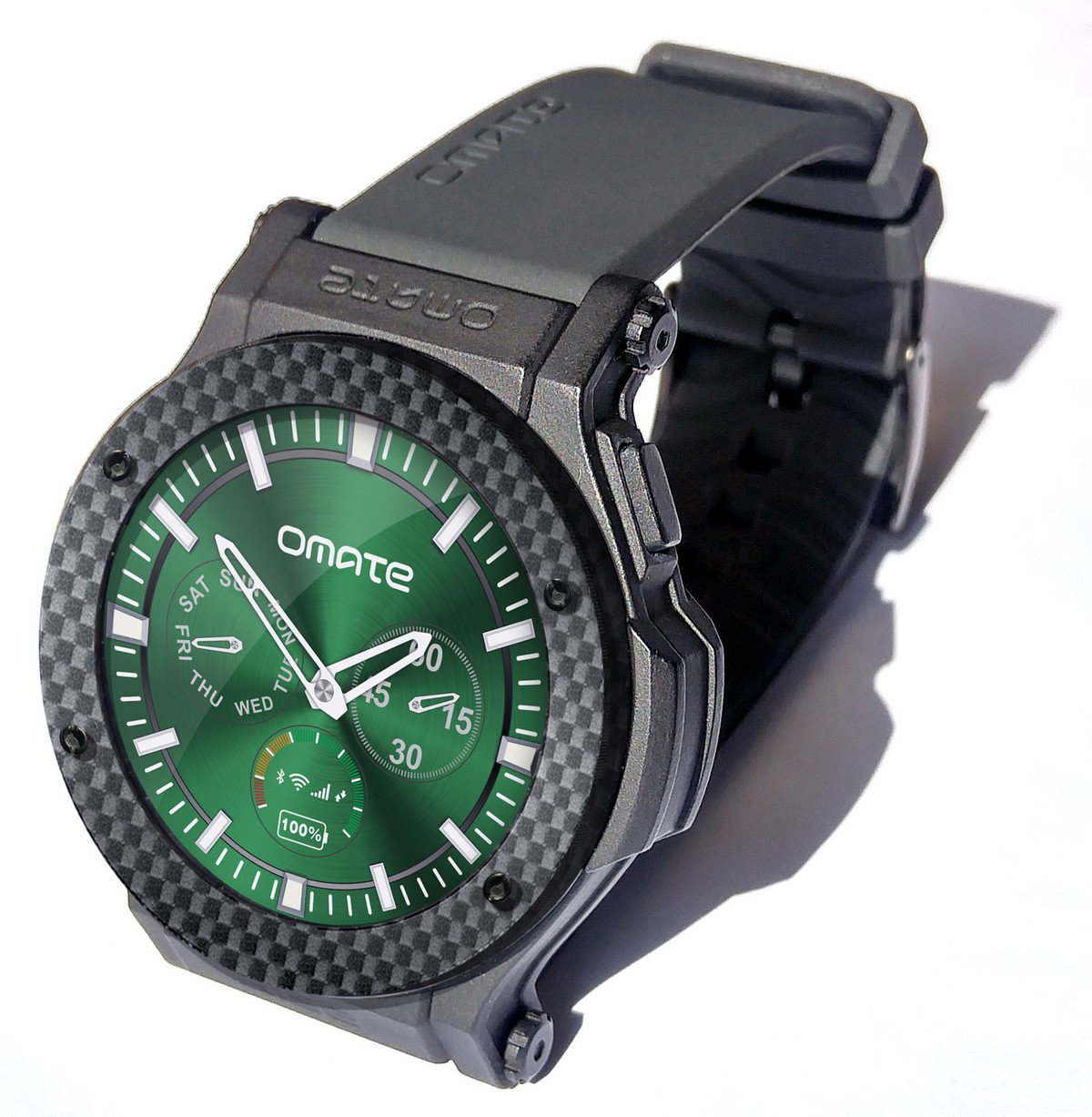
Imagine stepping out for a run, heading to the grocery store, or even just lounging at home, completely untethered from your smartphone. No bulky device in your pocket, no frantic search when you leave it behind. This isn't a futuristic dream; it's the reality offered by standalone smartwatches & wearables. These ingenious devices are changing how we interact with technology, providing the core functionalities of your phone right on your wrist, without the need for a constant Bluetooth leash.
For years, smartwatches served primarily as extensions of our phones—notifications, basic controls, and fitness tracking. But a new breed has emerged: wearables capable of handling calls, sending texts, streaming music, and even running apps independently, functioning almost as a miniature smartphone on your wrist. If the idea of true digital freedom appeals to you, read on.
At a Glance: Your Untethered Future
- True Independence: Standalone smartwatches operate without a paired smartphone, thanks to built-in cellular connectivity (eSIM or physical SIM).
- Full Communication: Make and receive calls, send and get messages (including WhatsApp), and even access social media directly from your wrist.
- Enhanced Freedom: Ideal for sports, emergencies, or simply reducing smartphone dependency.
- Key Features: Look for cellular (4G/LTE), robust battery life, durable screens, and comprehensive health sensors.
- Top Choices: Market leaders like the Apple Watch (Cellular) and Samsung Galaxy Watch (LTE) offer premium experiences, while other Android-based options provide diverse features and price points.
- Consider Your Ecosystem: Your current smartphone (iOS or Android) often influences the best standalone watch choice for seamless integration.
What Exactly Is a Standalone Smartwatch? Defining True Independence
At its core, a standalone smartwatch is a wearable device that can perform key smartphone functions—like making/receiving calls, sending/receiving messages, and accessing data over a cellular network—without being physically connected to or even near your smartphone. Think of it as having a tiny, specialized phone strapped to your wrist.
Unlike traditional smartwatches that rely on Bluetooth to relay information from a paired phone, these independent devices come equipped with their own cellular modem, typically an eSIM (embedded SIM) or a physical SIM card slot. This allows them to connect directly to a mobile network, just like your smartphone does. This direct connection means you can go for a jog, leave your phone at home, and still be reachable for an urgent call or message, or even stream music on the go. You can even read and reply to WhatsApp messages directly from the device, highlighting their advanced capabilities for real-world social interaction.
This level of independence transforms a smartwatch from a mere accessory into a primary communication and utility tool. If you're looking to explore more about devices that offer such capabilities, you can always learn about standalone solutions more broadly across different tech categories.
Why Go Untethered? The Freedom Factor
The appeal of a standalone smartwatch is multifaceted, driven primarily by the desire for freedom and convenience in our increasingly connected lives.
Liberate Your Pockets and Mind
For many, the sheer bulk of a modern smartphone is a nuisance, especially during physical activity. Standalone smartwatches eliminate the need to carry your phone during a run, bike ride, or gym session. Devices like the Garmin Vivoactive 3 Music, known for its elegant design and suitability for sports, exemplifies this freedom by allowing you to track activities and listen to music without your phone weighing you down. This also fosters a kind of "digital detox lite," where you're reachable for essentials but less distracted by the constant pull of your smartphone.
Safety and Emergencies
In an emergency, having direct communication on your wrist can be a lifesaver. Features like fall detection with automatic emergency calling, as seen in the Apple Watch Series 4 (Cellular version), provide immense peace of mind. Whether you're hiking alone or have an elderly relative, the ability to summon help without needing a phone in hand is invaluable. Even simpler devices with basic SIM card capabilities, such as an Unnamed Smartwatch ("Smartphone Look-alike") designed to resemble an emergency smartphone, offer high autonomy for critical communication.
Seamless Connectivity, Minimal Effort
Imagine receiving a critical work email or a family update while your phone is charging in another room. With a standalone smartwatch, these notifications arrive directly. You can even respond or take action immediately. This is particularly useful for quick, actionable tasks that don't require the full screen and keyboard of a phone.
The Tech That Makes It Tick: How Standalone Works
Understanding the core technologies behind standalone smartwatches helps you appreciate their capabilities and make an informed choice.
Built-in Cellular: The Heart of Independence
The most critical component is the integrated cellular modem. This enables the watch to connect to 4G, 3G, or even 2G networks, allowing it to function as a tiny phone.
- eSIM vs. Physical SIM: Most modern standalone smartwatches, like the Apple Watch Series 4 (Cellular) and Samsung Galaxy Watch (LTE), utilize an eSIM. This embedded chip is provisioned digitally by your carrier, making setup seamless and eliminating the need for a physical card. Older or more budget-friendly models, such as the LEMFO LEM6 or some Unnamed Smartwatches, might include a physical SIM card slot (often Nano-SIM), offering compatibility with a wider range of carriers or prepaid options. Understanding how eSIM technology works can demystify this process.
- Network Bands: Different watches support different network bands (2G, 3G, 4G LTE). 4G LTE offers the fastest data speeds for streaming, app downloads, and clear calls. Devices like an Unnamed Smartwatch (4G SIM, Android 7.0, Gorilla Glass 4) explicitly highlight their 4G SIM capability for robust performance.
Operating Systems: The Brains of the Operation
Just like smartphones, standalone smartwatches run on various operating systems, each with its own ecosystem, app availability, and user interface.
- watchOS (Apple Watch): Exclusively for Apple Watch, renowned for its fluid interface, deep integration with iOS, and extensive health features.
- Wear OS (Google): Powers many Android-compatible smartwatches, offering access to Google Assistant, Google Maps, and a vast app library from the Play Store. Devices like the Ticwatch E and Asus Zenwatch 3 leverage Wear OS for a versatile experience. An Unnamed Smartwatch (Android Wear 2.0, IP67) with integrated GPS further demonstrates the power of this platform.
- Tizen OS (Samsung): Samsung's proprietary OS, found on their older Gear series and some Galaxy Watch models, is known for its intuitive rotating bezel navigation and optimized battery life. The Samsung Gear S3 and Samsung Gear S2 are prime examples, praised for their discrete, functional design. An Unnamed Smartwatch (Tizen, Curved Screen) also showcases the OS's flexibility in design.
- Custom Android OS: Many budget or feature-rich standalone smartwatches run highly customized versions of Android, often giving them immense flexibility for hardware features like cameras and higher storage, as seen in devices like an Unnamed Smartwatch (4G SIM, Android 7.0, Gorilla Glass 4) running Android 7.0, or an Unnamed Smartwatch (Android 6.0, Removable Battery, Waterproof).
Onboard Hardware: Powering the Experience
Beyond cellular, standalone smartwatches pack significant hardware into their small form factors:
- Processor & RAM: A capable processor (e.g., quad-core 1.1 GHz Cortex-A7 in the Asus Zenwatch 3) and sufficient RAM (e.g., 1GB in an Unnamed Smartwatch (8GB/1GB, 720 mAh)) ensure smooth performance for apps and multitasking.
- Storage: Internal storage (e.g., 8GB in an Unnamed Smartwatch (8GB/1GB, 720 mAh), 16GB in an Unnamed Smartwatch (4G SIM, Android 7.0, Gorilla Glass 4)) is crucial for storing music, apps, and even photos/videos, allowing for a truly phone-free experience.
- GPS: Essential for accurate activity tracking, navigation, and location services without needing a phone. Many fitness-focused devices like the Garmin Vivoactive 3 Music and an Unnamed Smartwatch (Android Wear 2.0, IP67) include integrated GPS.
- Speaker & Microphone: Fundamental for making and receiving calls directly on the watch. Watches like the LEMFO LEM6 and an Unnamed Smartwatch (1.8x1.65" screen, SIM, Camera) prominently feature these.
Key Features to Look For (and Why They Matter)
When selecting a standalone smartwatch, prioritizing certain features will help ensure it meets your specific needs.
1. Robust Cellular Connectivity (4G/LTE is King)
For true independence, 4G LTE capability is paramount. It guarantees reliable calls, fast data for streaming music or using apps, and quicker message delivery. While 3G and 2G options exist (like the GSM G3 in LEMFO LEM6), they offer slower speeds and may have less future-proofing as carriers phase out older networks. Always check for explicit 4G/LTE support if continuous, fast connectivity is a priority.
2. Display & Durability: Seeing and Enduring
- Screen Quality: Look for bright, vibrant displays. AMOLED screens, found on models like the Samsung Galaxy Watch, offer excellent contrast and power efficiency. Screen size matters for readability (e.g., 1.2-inch for compact models, up to 2.2-inch rectangular screens on some Unnamed Smartwatches).
- Protection: Gorilla Glass (e.g., Gorilla Glass 3 on Garmin Vivoactive 3 Music and an Unnamed Smartwatch (Android Wear 2.0, IP67), Gorilla Glass 4 on an Unnamed Smartwatch (4G SIM, Android 7.0, Gorilla Glass 4)) offers crucial scratch resistance.
- Water Resistance: An IP67 or higher rating (e.g., Unnamed Smartwatch (Android Wear 2.0, IP67) is essential for everyday use, protecting against splashes and sweat. Some are even waterproof for swimming (e.g., an Unnamed Smartwatch (Android 6.0, Removable Battery, Waterproof)), though some independent models, like an Unnamed Smartwatch ("Smartphone Look-alike"), explicitly lack water protection.
3. Battery Life: The Endurance Test
This is arguably the most critical factor for standalone use. Cellular connectivity, GPS, and a bright screen drain batteries quickly.
- Real-world expectations: While some standard smartwatches last days, standalone mode (especially with active cellular use) often means 1-2 days. The Apple Watch Series 4 (Cellular) typically lasts a day with moderate use.
- Exceptional Performers: The 46mm Samsung Galaxy Watch boasts up to 3 days, double that of its 42mm counterpart, and is noted for superior battery life compared to the Apple Watch. The Garmin Vivoactive 3 Music can last 7 days normally or 13 hours with GPS, showcasing efficiency for specific use cases. The F1 Smartwatch impresses with nearly 4 days of battery life, making it powerful for extended use without frequent charging.
- Capacity: Higher mAh ratings (e.g., 720 mAh in an Unnamed Smartwatch (8GB/1GB, 720 mAh), 580 mAh in an Unnamed Smartwatch (4G SIM, Android 7.0, Gorilla Glass 4)) generally indicate longer battery life, but optimization plays a huge role. Rapid charging (e.g., 60% in 15 minutes for Asus Zenwatch 3) is also a plus.
4. Health & Fitness Tracking: Your Wrist-Bound Coach
Almost all smartwatches offer activity tracking, but standalone models can do so independently.
- Core Metrics: Pedometer, calorie tracking, distance, sleep monitoring are standard (e.g., LEMFO LF07, F1 Smartwatch).
- Heart Rate: Optical heart rate sensors are common (e.g., Garmin Vivoactive 3 Music, Apple Watch Series 4, Samsung Galaxy Watch, Ticwatch E). Some advanced models, like an Unnamed Smartwatch (8GB/1GB, 720 mAh) or F1 Smartwatch, claim blood pressure monitoring, though accuracy varies.
- Advanced Features: Fall detection (Apple Watch Series 4), GPS for route mapping, and personalized training insights (as offered by the Garmin Vivoactive 3 Music) elevate the fitness experience. Some even include barometers, compasses, or UV light sensors (e.g., an Unnamed Smartwatch (Tizen, Curved Screen)).
You might want to explore the benefits of dedicated fitness trackers for more in-depth health insights.
5. Speaker, Microphone & Camera: The Full Package
For true phone-like functionality, these are key.
- Calls & Voice Assistant: Integrated speakers and microphones allow for hands-free calls directly from your wrist (e.g., LEMFO LEM6, Unnamed Smartwatch (1.8x1.65" screen, SIM, Camera), Samsung Galaxy Watch). They also enable interaction with voice assistants like Google Assistant.
- Camera: While not standard, some standalone watches include a camera (e.g., 1.3-megapixel in an Unnamed Smartwatch (1.8x1.65" screen, SIM, Camera), or positioned between side buttons on an Unnamed Smartwatch (4G SIM, Android 7.0, Gorilla Glass 4)). This offers basic photo/video capabilities, adding to the device's independence, though quality is often limited.
Top Contenders in the Standalone Arena: Examples & Use Cases
The market for standalone smartwatches is diverse, with options catering to different ecosystems, budgets, and priorities. Here's a look at some notable examples and what makes them stand out.
For the iPhone Loyalist: Apple Watch Series (Cellular)
- Key Features: Renowned for its seamless integration with iOS, comprehensive health monitoring (ECG, blood oxygen, fall detection, real-time heart rate), robust app ecosystem, and highly responsive interface. The cellular version truly enables texting and calls without a paired iPhone.
- Best For: iPhone users who want the most integrated, feature-rich, and reliable standalone experience, prioritizing health and safety.
- Considerations: Shorter battery life compared to some competitors (typically a full day), and exclusive to the Apple ecosystem.
The Android/iOS Versatile Performer: Samsung Galaxy Watch (LTE)
- Key Features: Compatible with both Android and iOS smartphones, available in appealing 42mm and 46mm models with vibrant AMOLED screens. Control is intuitive via touchscreen or a mechanical-feel bezel. The LTE version includes a SIM card slot for full standalone connectivity. It excels in battery life (the 46mm version offers up to 3 days), accurate heart rate monitoring, and Samsung Pay support.
- Best For: Users seeking a premium, versatile standalone smartwatch with excellent battery life, a classic watch aesthetic, and compatibility across ecosystems.
- Considerations: Can be pricey, and Samsung's Tizen OS (or Wear OS for newer models) has a different app ecosystem than Apple's.
The Fitness Enthusiast's Choice: Garmin Vivoactive 3 Music
- Key Features: An elegant, small device made from quality materials, featuring a round Gorilla Glass 3 protected screen and a stainless steel face. Its strong suit is fitness tracking, acting as a personal trainer with integrated GPS, optical heart rate sensor, and the ability to store and play music. Impressive battery life, lasting 7 days normally or 13 hours with continuous GPS.
- Best For: Active individuals who want robust fitness tracking, music on the go, and long battery life for extended workouts, without needing their phone present.
- Considerations: While it supports some smart features, its primary focus is fitness, and its cellular capabilities are not as broad as a full communication-focused standalone watch.
Value-Packed Versatility: Ticwatch E and Android OS Alternatives
- Ticwatch E: Built from polycarbonate for a comfortable and elegant design, it includes a heart rate monitor and (crucially for standalone functionality) a SIM card slot. Its 300 mAh battery provides an impressive 2-day life and charges fully in just one hour. Highly recommended as a reliable, affordable standalone option running Wear OS.
- LEMFO Series (e.g., LEMFO LEM6, LF07): These watches often offer a compelling blend of features at a more accessible price point. The LEMFO LEM6, for instance, provides standalone GSM G3 capabilities with a speaker and microphone for calls and texts. The LEMFO LF07, visually similar to the Apple Watch, operates perfectly without a paired device and includes activity monitoring.
- Other Android-based Smartwatches: The ground truth reveals a range of highly capable, if less branded, options. An Unnamed Smartwatch (4G SIM, Android 7.0, Gorilla Glass 4) boasts a camera, mic, 4G SIM, 16GB storage, and 1GB RAM on Android 7.0. Another Unnamed Smartwatch (8GB/1GB, 720 mAh) offers 3G/2G SIM, 8GB storage, 1GB RAM, and a large 720 mAh battery with comprehensive health sensors (heart rate, blood pressure, pedometer, GPS). These devices often prioritize a more complete "phone on your wrist" experience, sometimes including unique features like cameras (e.g., an Unnamed Smartwatch (1.8x1.65" screen, SIM, Camera)).
- Best For: Budget-conscious buyers, Android users looking for specific features not offered by mainstream brands, or those wanting to experiment with a fully independent device.
- Considerations: Software updates might be less consistent, and app ecosystems can be more fragmented compared to watchOS or Wear OS. Quality and long-term support can vary.
Samsung Gear S Series: The Bezel Navigation Icons
- Samsung Gear S3: Features a 1.3-inch display and a distinctive round design with a rotating bezel for scrolling, providing a satisfying mechanical feel. Running Tizen OS 2.3.3, its 380 mAh battery can last a full day, or up to 3 days with moderate use. A built-in SIM card (in the LTE model) makes it a completely standalone device.
- Samsung Gear S2: An earlier model, also featuring bezel navigation. While it connects via Bluetooth to smartphones (requiring the Samsung Gear app, which was not available for iPhone at the time), its mostly functional use even without smartphone dependency showed early standalone potential.
- Best For: Users who appreciate Samsung's Tizen OS, especially the intuitive bezel navigation, and seek a standalone device that beautifully blends smartwatch functionality with the aesthetics of a traditional timepiece.
- Considerations: Older models might have limited app support compared to current Wear OS or watchOS devices.
Making the Right Choice: A Buyer's Guide
Choosing the perfect standalone smartwatch means balancing features with your personal needs and ecosystem.
1. Your Smartphone Ecosystem: Play to Your Strengths
- iPhone User: The Apple Watch (Cellular version) is almost certainly your best bet for seamless integration, app availability, and overall user experience. While some Android-compatible smartwatches work with iOS (like the Samsung Galaxy Watch or LEMFO LF07), you'll lose out on some features and integration depth.
- Android User: You have a broader range of choices. Samsung Galaxy Watch, Ticwatch models, and many other Android-based standalone watches are excellent options. Consider how well they integrate with your specific Android phone model and preferred apps.
2. Primary Use Case: What Do You Need It For?
- Fitness & Sports: Prioritize built-in GPS, accurate heart rate monitoring, water resistance, and long battery life with GPS active (e.g., Garmin Vivoactive 3 Music, F1 Smartwatch, Apple Watch, Samsung Galaxy Watch).
- Communication & Connectivity: Focus on strong 4G/LTE support, clear speaker/mic, and compatibility with your carrier's eSIM service (e.g., Apple Watch, Samsung Galaxy Watch, higher-end Android standalone models).
- Safety & Emergency: Look for fall detection, emergency SOS features, and reliable cellular connectivity (e.g., Apple Watch Series 4).
- "Digital Detox" / Minimalist: A simpler standalone watch that handles calls/texts but limits distracting apps might be ideal.
- Fashion Statement: Consider design, interchangeable straps, and screen aesthetics (e.g., Asus Zenwatch 3 with its rose gold bezel, Samsung Galaxy Watch, Samsung Gear S3).
3. Budget: From Premium to Practical
Standalone smartwatches span a wide price range.
- Premium: Apple Watch Cellular, Samsung Galaxy Watch LTE. These offer the most polished experience, best app support, and consistent updates, but come at a higher cost.
- Mid-Range: Ticwatch E, some Garmin models. Excellent balance of features, performance, and price.
- Budget-Friendly: Many lesser-known Android-based standalone watches. These can offer impressive feature sets (like cameras, high storage) for the price, but might involve compromises in software refinement or long-term support.
4. Desired Features: Prioritize What Matters
Make a list of "must-haves" and "nice-to-haves."
- Must-haves: Cellular connectivity, specific health sensors, water resistance, good battery life.
- Nice-to-haves: Camera, specific payment methods (Samsung Pay), advanced navigation, higher internal storage. Do you need 8GB/1GB RAM from an Unnamed Smartwatch (8GB/1GB, 720 mAh), or is less sufficient?
5. Comfort & Style: It's On Your Wrist All Day
The watch's size, weight, and strap material significantly impact comfort. Try on different models if possible.
- Weight: From 43 grams (Garmin Vivoactive 3 Music) to 89 grams (an Unnamed Smartwatch (Android Wear 2.0, IP67)), weight makes a difference.
- Strap: Interchangeable silicone straps (e.g., Garmin Vivoactive 3 Music, Samsung Gear S2, Unnamed Smartwatch (Android Wear 2.0, IP67)) are common and versatile. Rubber bands (e.g., on an Unnamed Smartwatch (4G SIM, Android 7.0, Gorilla Glass 4)) offer durability.
- Design: Round (most Samsung, Garmin, Ticwatch) or rectangular (Apple Watch, some Unnamed Smartwatches), classic or sporty.
6. Carrier Compatibility: A Crucial Check
Before buying, confirm that your mobile carrier supports the specific standalone smartwatch you're considering, especially for eSIM functionality. Not all carriers support all smartwatches, or they might charge an additional monthly fee for cellular watch service. This is a critical step for a truly untethered experience.
For a broader perspective on making tech decisions, you might also find it useful to consult our comprehensive smartwatch buying guide.
Common Myths & Misconceptions About Standalone Smartwatches
Like any evolving technology, standalone wearables are subject to a few misunderstandings. Let's clear them up.
Myth 1: "They're just tiny, clunky phones on your wrist."
Reality: While they share core functionalities, standalone smartwatches are optimized for quick, glanceable interactions, not lengthy browsing or typing. Their operating systems and apps are designed for efficiency on a small screen. Yes, an Unnamed Smartwatch (1.8x1.65" screen, SIM, Camera) might feel like a mini-phone, but the experience is distinct from using a smartphone.
Myth 2: "The battery life must be terrible with cellular."
Reality: Battery life is a significant challenge, but manufacturers are making strides. While continuous cellular use drains the battery faster, many premium models, like the 46mm Samsung Galaxy Watch, offer multiple days of moderate use, which is impressive for a cellular device. Features like "Power Saving Mode" and only activating cellular when away from your phone or Wi-Fi help extend life. Don't assume all standalone watches have poor battery; specific models excel, like the F1 Smartwatch with its nearly 4-day battery.
Myth 3: "You still need your phone nearby for most things."
Reality: This is the defining difference of standalone smartwatches. The whole point is independence. You can leave your phone at home and still make calls, send messages, stream music, track GPS, and receive notifications. The cellular connection is what cuts the cord.
Myth 4: "They're too expensive."
Reality: While premium standalone models from Apple and Samsung carry a higher price tag, the market offers a wide spectrum. Devices like the Ticwatch E or many Android-based options from brands like LEMFO provide standalone capabilities at much more accessible price points, making untethered tech available to more people.
The Future of Wearables: What's Next?
The trajectory of standalone smartwatches points towards increasing integration, miniaturization, and enhanced health capabilities. We can expect even longer battery life, more powerful processors capable of running complex AI tasks directly on the device, and a wider array of sophisticated health sensors, potentially offering non-invasive blood glucose monitoring or advanced diagnostics. As 5G networks become more ubiquitous, the speed and reliability of these wrist-worn devices will only improve, blurring the lines further between a smartwatch and a truly self-sufficient personal computing device. This evolution is part of a larger trend in latest trends in wearable tech that continually pushes boundaries.
Embracing Untethered Living
The allure of the standalone smartwatch is clear: it’s about reclaiming freedom, enhancing safety, and streamlining your digital life. Whether you're a hardcore athlete, a busy professional, or simply someone seeking less screen time with your primary device, there's a standalone wearable designed to fit your lifestyle.
By carefully considering your existing smartphone ecosystem, your primary use cases, and the critical features like cellular connectivity, battery life, and durability, you can navigate the diverse market with confidence. The ability to leave your phone behind and still stay connected, safe, and productive is no longer a luxury—it's an accessible reality that's transforming how we interact with the world, one tap and glance at a time. The next step is choosing the right one for you and experiencing the liberation of the untethered wrist.